
Rewire Your Brain - Overcome Division
What Brain Science Tells Us About Neuroplasticity & Polarization

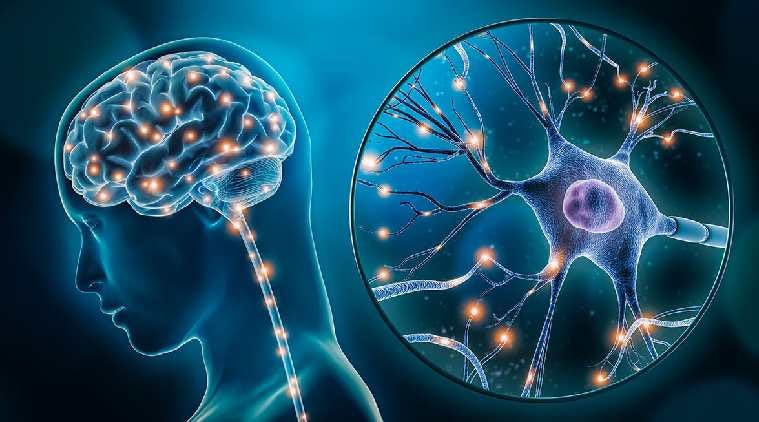
Warning: reading this column may change your brain…proceed at your own risk!
Here is how political discourse typically runs these days:
“Oh, you’re a Democrat? You must be a socialist, far-left lunatic who wants to undermine the foundations of our civilization. You are evil and a threat to the nation.”
Or….
“Oh, you are a Republican? You must be a racist, MAGA supporter of a pedophile president. Your kind are undermining our democracy and a threat to our way of life.”
Assessment complete….judgment ruled…person dismissed.
Get it? These snap judgments on the character and nature of other people are instantaneous. They require no real knowledge of the person. We only have to put a label on them, which we can then use to make all sorts of assumptions and suspicions about their intentions. We come to believe that the label is the real person….
(horn blast) WRONG!
We are not our labels
These assumptions and snap judgments operate subtly. We all have unconscious biases that lead us to immediately evaluate others based on their physical features. I know that many times, I have had a primitive, knee-jerk reaction to someone of a different ethnicity, body size or shape, and disability. I didn’t have to think about it, because if I did, I would be appalled at my own lack of respect and humanity. But I reacted to an unconscious assumption or bias before I even knew a person’s name.
I am on a journey to change the way I view people. I hope you will bear with me in this column as I depart from my usual controversial topics and look within to uncover the hidden roots of bias and judgment. I invite you to join me in an effort to rewire our brains.
Neuroplasticity of the Brain
Human beings have the unique ability to deliberately change how their brains work…call it agency. Brainy brain experts call this neuroplasticity, and it involves creating new neural pathways through consistent, focused action, learning, and lifestyle changes.
One of the primary vehicles for this rewiring is in the use of language; changing how we use words and giving them different significance and importance. This process can actually change the brain’s physical structure. (There is a video at the end of this column that will explain the science of it.)
Okay, so here is what I am talking about specifically:
I want to rewire my brain to begin changing the filters through which I see and evaluate people. The filters that most of us use to judge the people we meet include many external factors: skin color, body size and shape, voice inflections and dialect, gender, status, and a multitude of other categories. In other words, we use labels to judge another person immediately.
These filters almost always result in an “us vs them” mentality and might come with a dose of hostility.
For example, I have an identity that is rooted in my physical being: I am a white, cisgender male, retired Midwesterner who lives in an agricultural state (Iowa). The judgment wheels can already start to turn based on these filters alone.
But the labels don’t stop with these features. We also use associations with ideas, groups, and institutions to create our identity. I am a progressive, liberal citizen who believes in the separation of church and state, votes mostly Democratic, and am agnostic when it comes to religion, on most days.
Do you see how this identity works? Already, you will probably be making many more assumptions and conclusions about “who I am” from this list of labels. If you are a conservative, white male who is Christian, you will likely dismiss most of what I have to say simply because of my labels. Moreover, this works both ways, and unfortunately, people miss each other before they ever have a chance to learn about the other person’s true being and nature.
Why do we settle for this?
Evolutionary Roots of Tribalism
This labeling, or what some call tribalism, is rooted in our evolutionary past when the use of external filters was critical to survival. People needed a fast way to size up unfamiliar tribes and determine whether they were friends or foes. Failure to do this might end up in a shortened lifespan.
Tribalism is also rooted in the evolutionary necessity for humans to live in small, cooperative groups, which favors in-group loyalty and caution towards outsiders. This “us vs. them” mentality, driven by natural selection, facilitated resource protection and protection against rival groups for thousands of years.
So, our evolutionary past has made this categorization and labeling of other people intuitive, automatic, and existential. We see someone and immediately “size them up” using filters… and we don’t stop to think about it.
This is where our human capacity for rewiring our brains comes in. It is time to stop… think… and evolve beyond our primitive instincts, and begin to see others in a new way.
Meet My Friend John
I first met John Bain at an author’s event at the Washington Public Library in Washington, Iowa, a few years ago. We were both there to present our books at an author festival. John was immediately likable, and we talked about our respective books.
John’s book, Christie’s Journey, The Beat Goes On, is the true story of the life-threatening illness his daughter experienced, who was pronounced dead but was later revived. Christie was born with a birth defect in her heart that no one knew about, which caused her to have a cardiac arrest. Her pulmonary artery was on the wrong side of her heart. After a death experience, she had corrective surgery. Her illness was a long journey back to health, but the story centered on John and his family’s faith in God and how they came together to nurture her.

Later, John invited me onto his podcast to talk about my book, Confessions of a Recovering Evangelical. It was clear that John and I were coming from two very different views of life and religion. But John was respectful and allowed me time on his podcast to share my experience.
By then, I knew that John was a Republican and conservative, with views that differed from my own. But through our conversations, which allowed us to humanize each other, we have become good friends.
When I think of John, I don’t think of a Republican or Christian. I think of John as a fellow human being with common experiences and interests. We want many of the same things: love and safety for our families, contributing to our community, and seeing our country succeed.
By approaching John as a fellow human being and learning of his love for his family and the challenges they faced due to the life-threatening illness of their daughter, I realized we had a common humanity. Superficial labels no longer seemed appropriate or meaningful since labels are usually meant to dehumanize the opposing side.
You cannot dehumanize someone with whom you have a connection.
I have learned an important lesson from my friendship with John Bain. If I had only reviewed his Facebook posts or heard him talk about his political views, it would have been easy to apply a couple of labels and filter him out completely. However, because we established a human-to-human connection through shared experiences, we were able to rise above what now seem to me petty beliefs… especially when they divide us.
This is what I mean by rewiring the brain. I think of John first as a human being, not a conservative, a Christian, or someone who supports Donald Trump. The order is important. John is first a human, who happens to be a Republican and a Christian.
Language Is Important
I have been working on rewiring my brain by deliberately using language. See if you can begin to follow this pattern. Start with yourself…how do you describe who you are?
“I am…”
Do you start with your gender? Race? Age? Roles? Political affiliation? Religion? How about this… start with the simple single phrase… human being.
Instead of “I am an agnostic.” I am trying to train my brain to start with the word “human.” So now, “I am a human being who happens to be agnostic.” This may sound like a trite or non-important change, but trust me, it isn’t…and it is hard to do.
Now, apply this to other people. Instead of sizing someone up by identifying them as a “male,” a “female,” or a “transgender person,” how about starting with this:
They are a “human being who happens to be male, or female, or transgender.”
The one thing we all have in common is our humanity, but training your brain to identify people that way is hard. It runs against evolution, but human agency allows us to challenge our evolutionary tendencies. We can rewire our brains. And if we can rewire our brains, perhaps we can overcome much of the enmity, division, hatred, and polarization that threaten our existence.
This doesn’t mean that the labels we choose to create our identity are unimportant. They still have relevance, but perhaps they should not have the priority. Seeing all humans through the lens of humanity is surely a transformational process, if we can embrace it.
Martin Luther King Jr. understood this principle. He encouraged people to change their perspectives…their brains. Here is one of my favorite quotes from King:
“We all must learn to live together as brothers or perish together as fools.”


I just finished re-reading Parker Palmer’s 20-year-old book “A Hidden Wholeness” and came away determined to see the humanity in each person I encounter. Your reminder about labels feels like synchronicity at work in my life.
Very interesting. Michael Shermer's two books--"The Believing Brain and "Why People Believe Weird Things"--uses the last 40+ years of studying the human brain along with evolutionary biology with his approach as a skeptic to traces how create believe turn it into agency and give it a name (label it). In the 2nd book mentioned he has a great chapter entitled "Why Smart People Believe Weird Things." As a psychologist, I studied and used what is "change theory" which explains how and why people can change. It starts with individual "insight and discovery" and recognition of the need to change.